
The BEAMS research group focuses on the synthesis and characterization of materials related to biomedical and aerospace applications. Material characterizations encompass crystallographic, structural, chemical, thermal, and mechanical property analysis applicable across a nano- to macroscale range. Below are ongoing research projects within the BEAMS research group.
Na-Battery
Rechargeable lithium-ion batteries (LIBs) are ubiquitous in our lives today. They can be found in many consumer electronics and devices, including smartphones, laptop computers, and power tools. They are increasingly being implemented in transportation applications, such as electric cars, scooters, and forklifts. However, concerns for further application of LIBs into large-scale grid systems have been raised about both the limited lithium Li resources on Earth and the high cost of LIBs. Sodium-ion batteries (SIBs) have received increasing attention as a potential energy storage alternative to LIBs due to the large natural abundance, low cost of sodium sources, and chemistry similar to LIBs. NaFePO4 (NFP) and other Na-Fe-O-P-based compounds are of particular interest because they consist of only Earth-abundant elements. Despite these advantages, the commercialization of SIBs is hindered by subpar cycling performance and poor rate capability due to the relatively large Na-ion radius.
It has been shown that desodiation of nanosized maricite NFP results in an amorphous FePO4 cathode material that can be reversibly de/intercalated with sodium. This discovery has led scientists to study amorphous Na-Fe-O-P cathode materials and the different methods of introducing disorder into the cathode matrix. The common methods for introducing disorder include high potential charging of maricite NFP batteries, ball-milling maricite NFP, and melt-quenching. All three methods require high temperatures; the melt-quench method requires a 900°C melting temperature, and the battery high-potential charging and ball-milling methods require synthesized maricite NFP. Maricite NFP is commonly synthesized through solid-state or sol-gel methods; the latter requires solvents, and both require temperatures greater than 400°C for calcination.
In this study, the authors investigated introducing disorder into the Na-Fe-O-P cathode system through the mechanical milling method by milling Na-Fe-O-P-based compounds together to create a homogenous mixture. This process is advantageous because neither high temperatures nor solvents are required for synthesis.
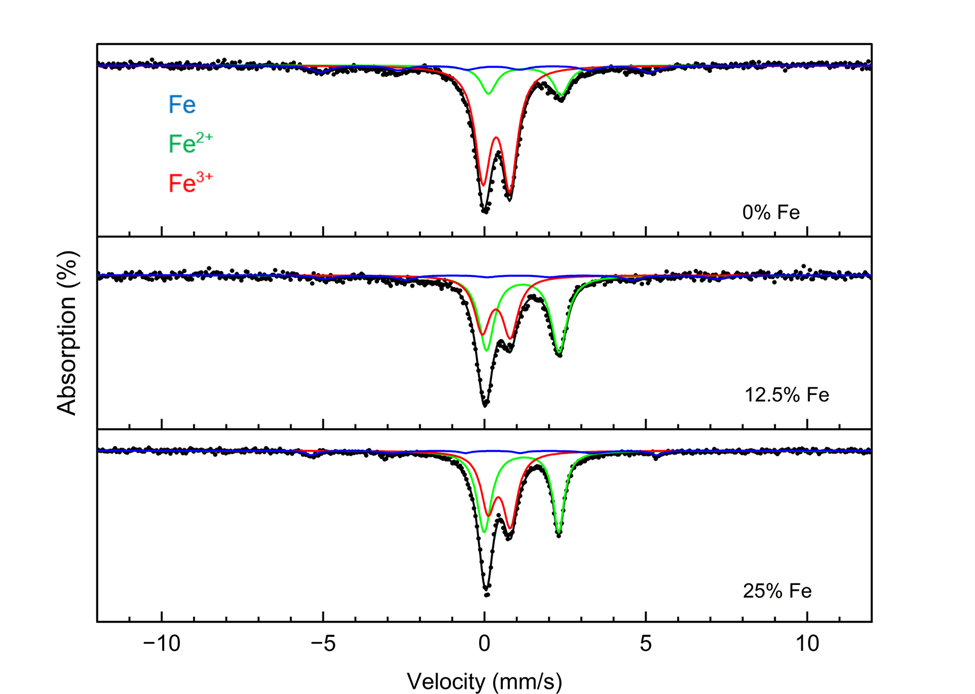
The graph used as the research icon is a Mossbauer spectrum plotted by summer research intern Emily Morgan. The red, green and blue fits represent Fe3+, Fe2+ and Fe valencies, respectively. The Na-Fe-P-O powders were adjusted to include either 0%, 12.5% or 25% additional Fe. The graph shows how inclusion of additional Fe influenced the Fe valencies of the cathode material.
Diamond-like carbon for lunar dust mitigation
The moon is of great interest for human habitat, but the extreme vacuum, temperature fluctuations between day and night, cosmic radiation, and lunar regolith are challenging for human health and equipment operation. The Moon’s surface is covered in a layer of regolith composed of crystalline rock fragments and minerals, including breccias, agglutinates, and glasses. Lunar dust is greyscale in color, sharp, ferromagnetic, toxic, insulating, and extremely erosive. The grains are electrostatically charged from solar radiation, which enhances their adhesion to a variety of surfaces, and they can sometimes chemically react with exposed surfaces. When exposed to regolith, spacesuits can be worn off, and parts such as seals, axles, and bearings can be subject to premature failure. Similar problems will likely be encountered with lenses, windows, photovoltaic arrays, and other transparent, electrically insulating surfaces. One way to mitigate these problems is by coating such exterior surfaces with a hard, transparent, weakly-conductive coating.
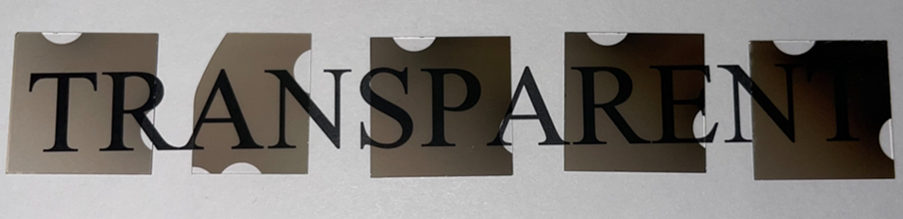
Diamond-like carbon (DLC) is an amorphous carbon thin film material with mixed sp2 and sp3 carbon bonding. DLC films are well known for their high hardness, low friction and wear, and excellent optical and electrical properties, which makes them ideally suited for many applications in mechanical, electronic, optical, and other technological areas. Different properties of the DLC film can be enhanced by controlling the ratio of sp2 and sp3 bonds. For example, when the sp2 to sp3 ratio is increased, “graphite-like” properties are enhanced, such as increased conductivity and lower surface energy. When the sp2 to sp3 ratio is decreased, “diamond-like” properties are enhanced, such as increased hardness and transparency. Thus, this work aims to tailor a DLC film with optimal properties suited for lunar dust mitigation on transparent surfaces. The icon image displayed for this project was taken by graduate student Tyler Roy, demonstrating how DLC sample’s film thickness (increasing from left to right) affects the film’s visible transparency.
Static and dynamic mechanical testing of additive-manufactured ceramics:
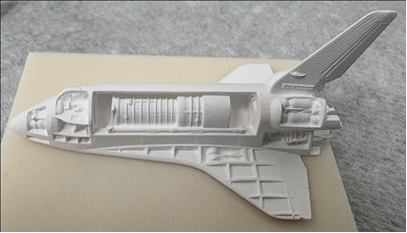
A critical aspect in the fabrication of ceramic materials is associated with the relatively expensive and time-consuming step of machining the sintered material in order to shape the final ceramic component. This poses a limitation in the design of complex parts. In recent years, the developments in the sector of additive manufacturing, especially in the area of metals and polymers, have provided optimal solutions for designing complex materials systems. This work aims to explore the microstructure-strength relationship of additive-manufactured ceramics using UTSI’s static and dynamic mechanical testing capabilities. The image used as the research icon for this project was taken by Dr. Chad Bond, with printing assistance from graduate student Tyler Roy. An alumina space shuttle green body fabricated with a ceramic 3D printer is featured as this icon.
Materials for extreme environments:
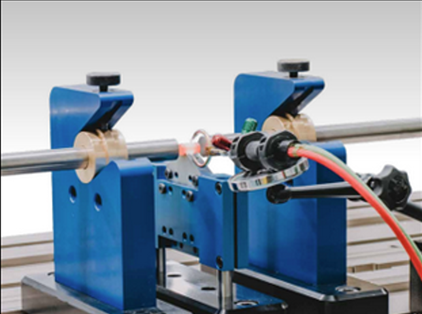
A focus on developing and testing advanced thermal protection system (TPS) materials for hypersonic vehicles is in increasing demand. Advancements in aerospace capabilities require the development of materials that can withstand extreme temperatures, pressures, and reactive environments during flight. The central aim for this research project involves generating detailed characterization data that helps determine how these materials respond under comparable hypersonic conditions, including dynamic mechanical response, thermal stability, and structural integrity. The icon for this research project is a sample in the split-Hopkinson pressure bar system being heated by an oxyacetylene torch; taken by REL Inc.
Iron nanoparticles for magnetic particle imaging:
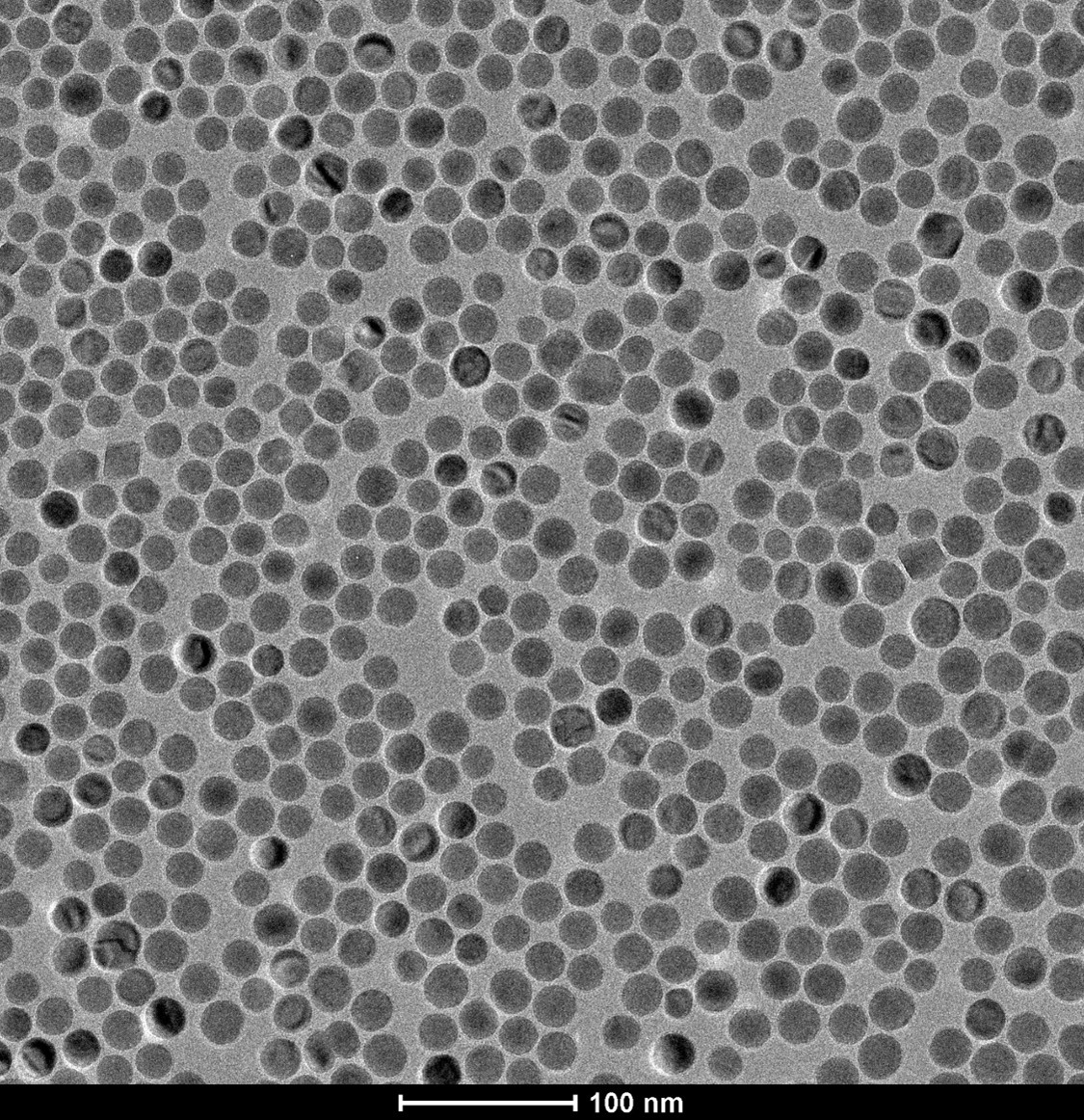
Magnetic Particle Imaging (MPI) is a developing imaging technique that promises higher sensitivity, contrast, and real-time imaging capabilities. This could improve the quality of medical imaging in numerous sectors ranging from cancer imaging to STEM cell research. Iron nanoparticles are utilized as tracers (the components that produce the image) to make this imaging technique possible. This research project is investigating how to develop iron nanoparticles that are optimized to deliver the best performance as MPI tracers by improving imaging resolution and contrast. This can be accomplished through studying various synthesis reactions (thermal decomposition, sol-gel reactions, and esterification, for example) to create iron nanoparticles of a certain size and a pure crystalline phase of magnetically susceptible iron species (pure iron or magnetite). This project combines material science and chemistry to further the development of a technology for use in biomedical applications and potentially improve an aspect of medical care. The image displayed in the project icon was obtained at VINSE laboratory (Vanderbilt University) by equipment operator James McBride. The image consisted of iron nanoparticles synthesized by graduate student Willem Graham under observation using transmission electron microscopy (TEM).
Light-channeling, glass-ceramic, scintillator materials for improved medical X-ray imaging:
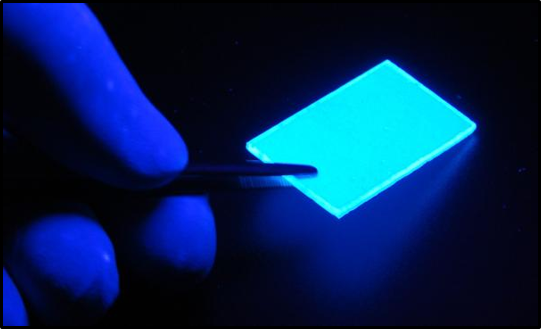
Electronic portal imaging devices, using indirect flat panel detector (I-FPD) technology, have become standard in radiation therapy. Unfortunately, the I-FPDs that are currently available for portal imaging have a low detective quantum efficiency at megavoltage energies. There has long been a need for a higher efficiency X-ray detector at megavoltage energies. Higher efficiency detectors would improve soft tissue contrast resolution in beam’s-eye-view imaging applications such as real-time tumor tracking for motion management and enable clinically useful megavoltage cone-beam computed tomography at lower dose. The investigators’ goal is to improve image quality and reduce dose for X-ray imaging applications by developing a novel structured, glass-based conversion screen that will detect X-rays with megavoltage energies more efficiently. The image featured as this project’s icon is a photograph of a glass-ceramic sample luminescing upon exposure to ultraviolet light taken by Dr. Lee Leonard